1. Day Away 2. City Crazy 3. Early Morning Song 4. Back to Stay 5. Seagull-Sunday 6. If You'd Been There 7. Songs For the Laird of Connaught Hall Pt. 2 8. Making Losing Better 9. Lady & The Gentle Man 10. Downderry Daze 11. Pebble & The Man 12. It Seems Very Strange
This record simultaneously haunts and soothes, a well-crafted piece of baroque psychedelic folk whose understatedness perhaps accounts for why Bridget has been unjustly ignored by the so-called "freak folk" revival of recent years. Her voice draws comparisons to Nico, except that Bridget sings on pitch, and unfortunately that comparison may have kept some from taking in her singular and unique vision. All of Bridget's records are wonderful but this one is a particular favorite of mine. I can, and have, written all manner of overwrought graduate-student prose about this album but I will hold my tongue and let it speak for itself. Often people stumble across her work via her associations with John Peel, Kevin Ayers, or Nick Drake. I found out about her through the personal recommendation of a friend many years ago, and for me that's the best way to discover something as special as this record is to me. If you like it, buy the reissue from Cherry Red. Bridget is still around, living in NYC, and occasionally performing.Songs for the Gentle Man (1971) {Dandelion/Cherry Red} baixar aqui!

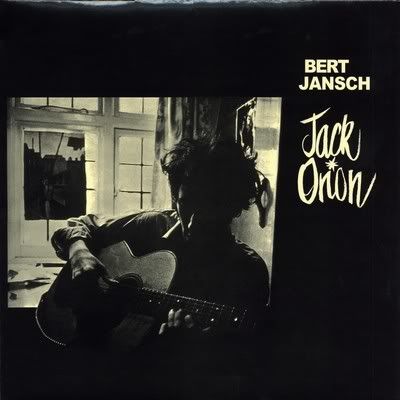
Bert Jansch Jack Orion
Release Date: 1966
Recording Date: 1966
Label: Vanguard
This pressing: 2003 Earmark vinyl reissue {42007}
Genre: FolkTracks: 1 The Waggoner's Lad - 3:25 2 The First Time Ever I Saw Your Face - 1:41 3 Jack Orion - 9:46 4 The Gardener - 1:42 5 Nottamun Town - 4:33 6 Henry Martin - 3:11 7 Blackwaterside - 3:44 8 Pretty Polly - 4:00Bert Jansch's importance to folk music, to the acoustic guitar and everyone who has ever played one since, cannot be overstated. Neil Young once called him "the Jimi Hendrix of the acoustic guitar" and Jimmy Page ripped him off unabashedly. (I love Pagey but he often didn't give credit where credit it due -- 'Black Mountainside' being listed as 'Traditional, arrangement by J.Page' is a case in point: he lifted the guitar arrangement from Jansch almost note for note...).
All classic-rock name dropping aside, Jansch was a pivotal figure of the English folk-revival. Along with others like John Renbourne (later his bandmate in Pentangle), they attached themselves to old stalwarts of the folk scene like Davey Graham and soaked up everything they could, engaging in a musical project that was both archival and interpretive as it sought to make a place for the roots music of the British Isles at the time when the word "folk" had become synonymous in popular culture with N.Americans like Dylan, Guthrie, Seeger. Unlike John Renbourne, whose playing style and recordings have always struck me as a bit "studied" and academic in their approach, Jansch seemed to actually be living the iconic folk troubadour role. Every touch of his fingers on the fretboard, every note of his imperfect but perfectly-suited tenor making us believe that he had simply strolled into our parlors off the street, fresh from hitchhiking across the English countryside, to play us a few tunes for his dinner. Along with his 1971 record Rosemary Lane, this is a record steeped in "tradition" without making museum pieces of his material. I recommend all of Jansch's early material, and his work with Pentangle, to those interested -- but this is as great a place to start as any.
AMG Review by Richie UnterbergerAfter presenting almost all-original sets on his first two albums (albeit originals that sometimes borrowed heavily from traditional folk themes), Jansch opted to devote all of his third LP to traditional folk numbers. His future Pentangle partner John Renbourn joins him on four of the eight songs. Highlights include the ten-minute title track (whose length was a real oddity on contemporary folk albums of the time) and a cover of "Nottamun Town" (whose melody Dylan lifted for "Masters of War"). Not as original as the artist's first two LPs, the guitar and vocal work on these adaptations were still as influential to the '60s folk world as anything else in Jansch's catalog.